Hump Nose Correction — Why Shaving It Down Isn't the Whole Story

A hump nose shows up in profile as a raised middle section of the bridge, and many people come in for a consultation because it makes their features look a little strong or older than they feel. It is tempting to assume that "shaving off the bump is all it takes," but in practice this is a procedure that has to account for the underlying bone and cartilage together. This column walks through why a hump forms and what to keep in mind when planning correction.
Why a Hump Forms
A dorsal hump is usually created by two tissues that make up the bridge working together.
- Nasal bone: the firm bone forming the upper half of the bridge
- Septal cartilage: the cartilage supporting the lower part of the bridge
Often this tissue is simply well developed from birth, but a hump can also become prominent when bone heals unevenly after trauma or a previous surgery.
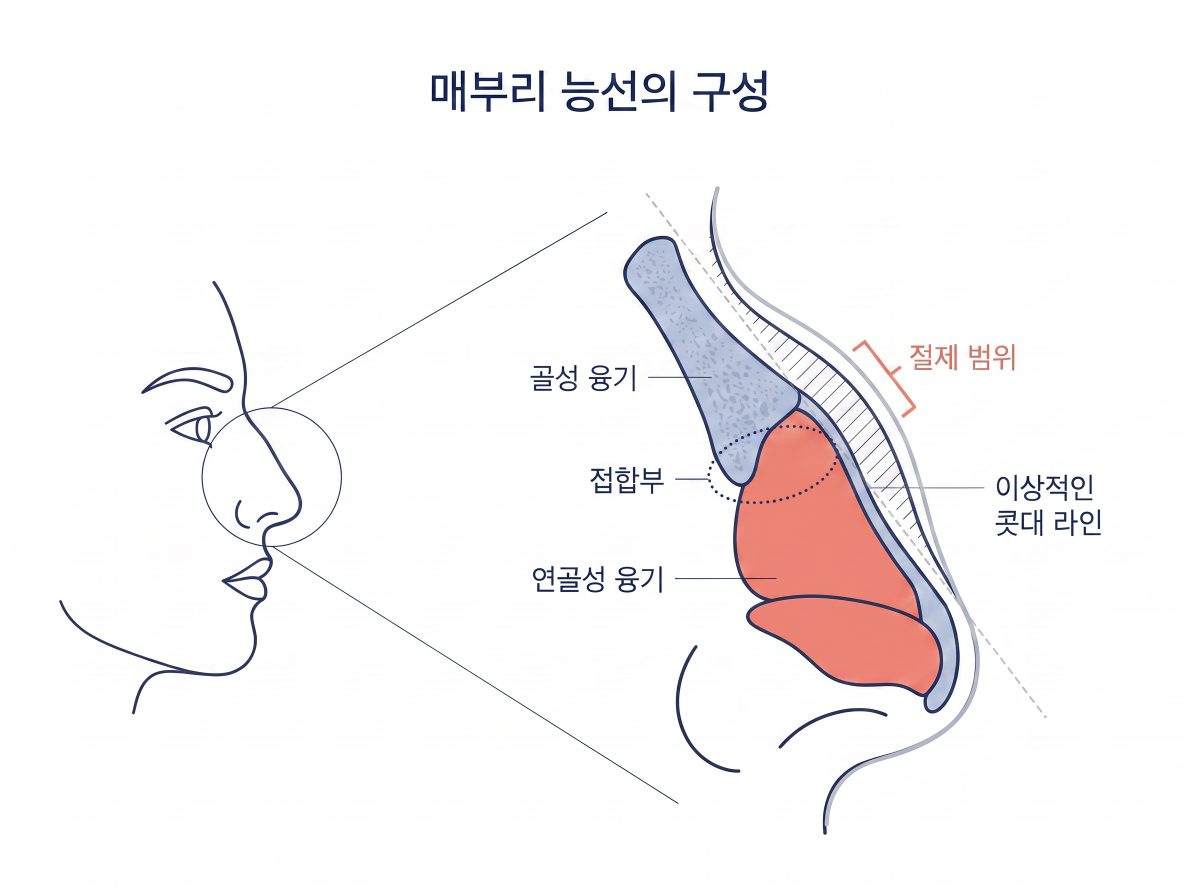
Why Shaving Alone Isn't Enough
Reducing the hump opens up the roof structure at the center of the bridge, so leaving it as-is can make the bridge look flat and wide.
- Hump reduction: smoothing down the bony and cartilaginous prominence
- Lateral osteotomy: narrowing the opened bridge width to restore a natural curve
These two steps are generally considered together, and the method and extent vary with the size of the hump and the thickness of the bone.
Balance With the Nasal Tip
The impression a profile gives depends not only on the bridge but on its relationship with the height and angle of the tip.
- A drooping tip: if the tip points downward, the hump can look more pronounced than it really is, so tip adjustment is sometimes planned alongside it.
- The overall line: lowering only the bridge can occasionally look flat or unnatural, so the balance of the whole profile is considered together.
Recovery and Limitations
- Swelling and bruising: because bone is involved, bruising around the eyes can occur; much of the early swelling typically settles over 2–3 weeks, while subtle residual swelling stabilizes over several months (varies by individual).
- Irregularities and asymmetry: minor irregularities or side-to-side differences can remain as the bone heals.
The same result cannot be promised for everyone, and the approach differs depending on the condition of the bone and cartilage.
Closing
Hump nose correction is not simply a matter of shaving down the raised area; it involves smoothing the opened structure afterward and considering balance with the tip. Because each person's bone and cartilage structure and desired profile differ, the actual plan is best decided through an in-person consultation and individual assessment with a specialist.