How Can You Tell a Simply Upturned Nose from a Contracted Nose?

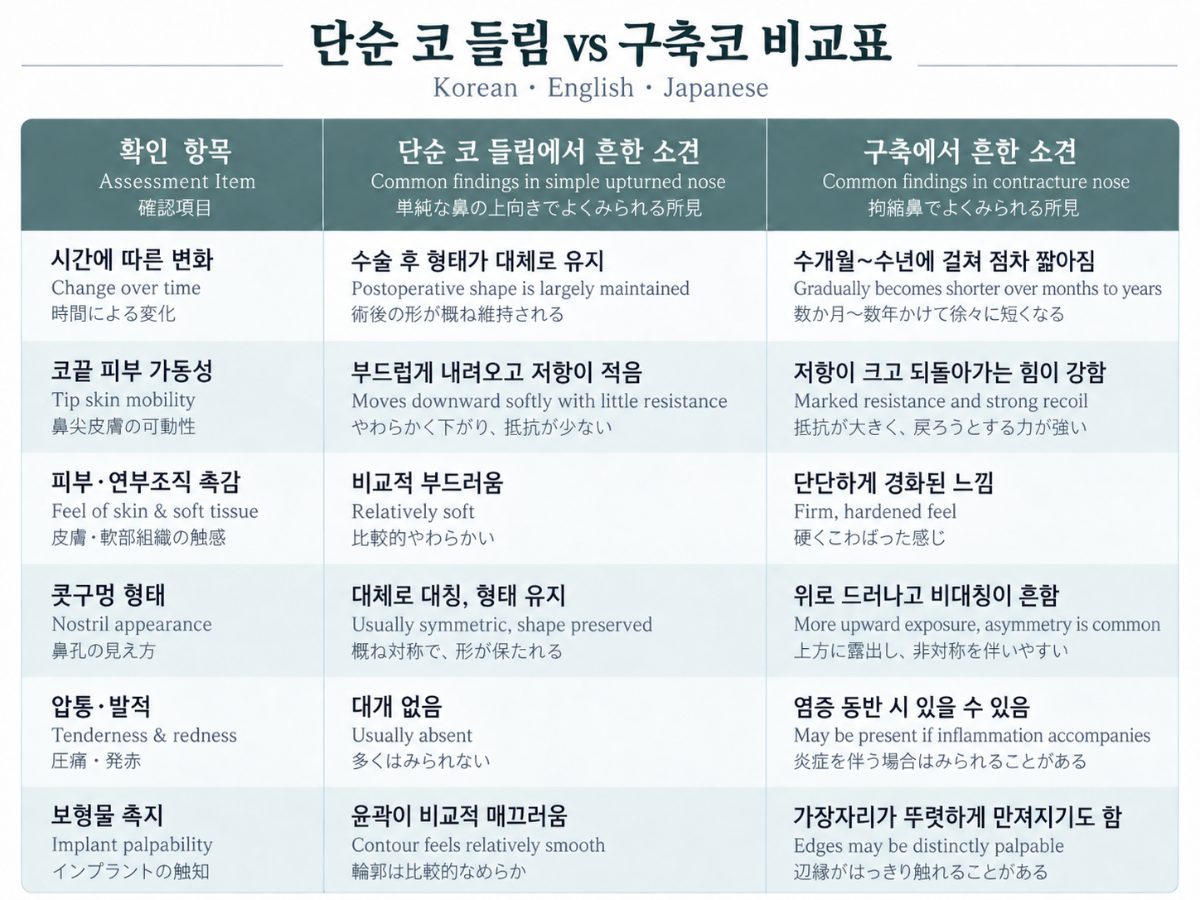
A simply upturned nose and a contracted nose share the same outward impression — a tip that appears rotated upward — but they diverge in how they change over time and in the character of the tissue. With simple upward rotation, the shape seen soon after surgery largely persists and the tip skin glides downward with little resistance. With contracture, the nose tends to shorten gradually over months, the skin and soft tissue firm up, and the nostrils become more exposed on frontal view. Because the two call for different corrective strategies, they are distinguished by evaluating the clinical course, palpation findings, and accompanying symptoms together (findings vary between individuals).
Which Structures Make a Nose Look Upturned?
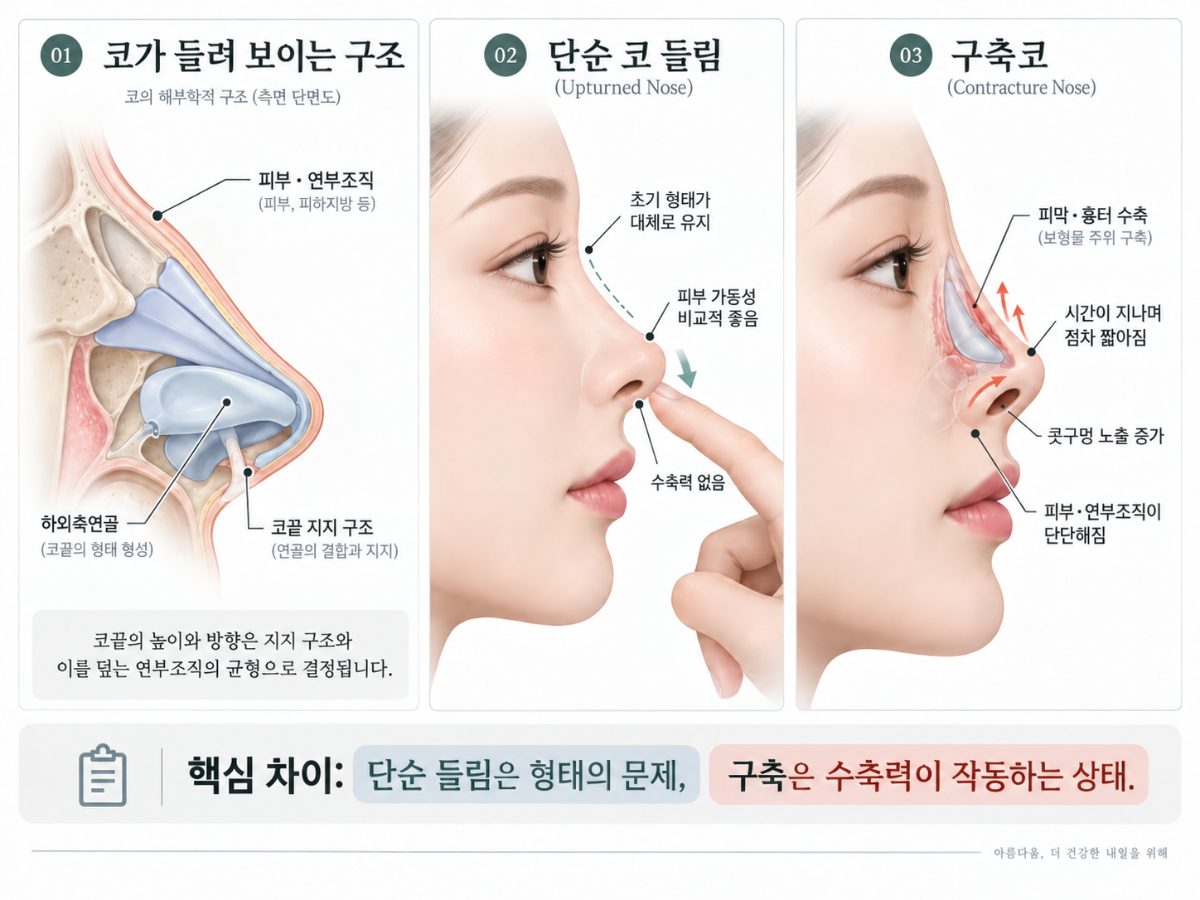
The height and direction of the nasal tip are determined by the balance among the caudal septum (the lower end of the central partition inside the nose), the lower lateral cartilages that form the tip, the framework linking them, and the skin–soft tissue envelope covering all of it.
As a reference measurement, the nasolabial angle — formed by the columella and the upper lip — is commonly cited as roughly 95–105 degrees in women and 90–95 degrees in men. These are reference values to be read alongside overall facial proportion, not absolute standards.
This is where the essential difference emerges. In simple upward rotation, the length and position of the supporting framework were configured that way from the outset — sometimes congenitally, sometimes as a result of the tip having been rotated further than necessary at surgery. In contracture, by contrast, a capsule around an implant or scar tissue is actively shortening and pulling the nose upward. In short, the dividing question is whether this is a matter of shape alone, or whether a contractile force is still at work.
What Is Checked on Examination to Tell Them Apart?
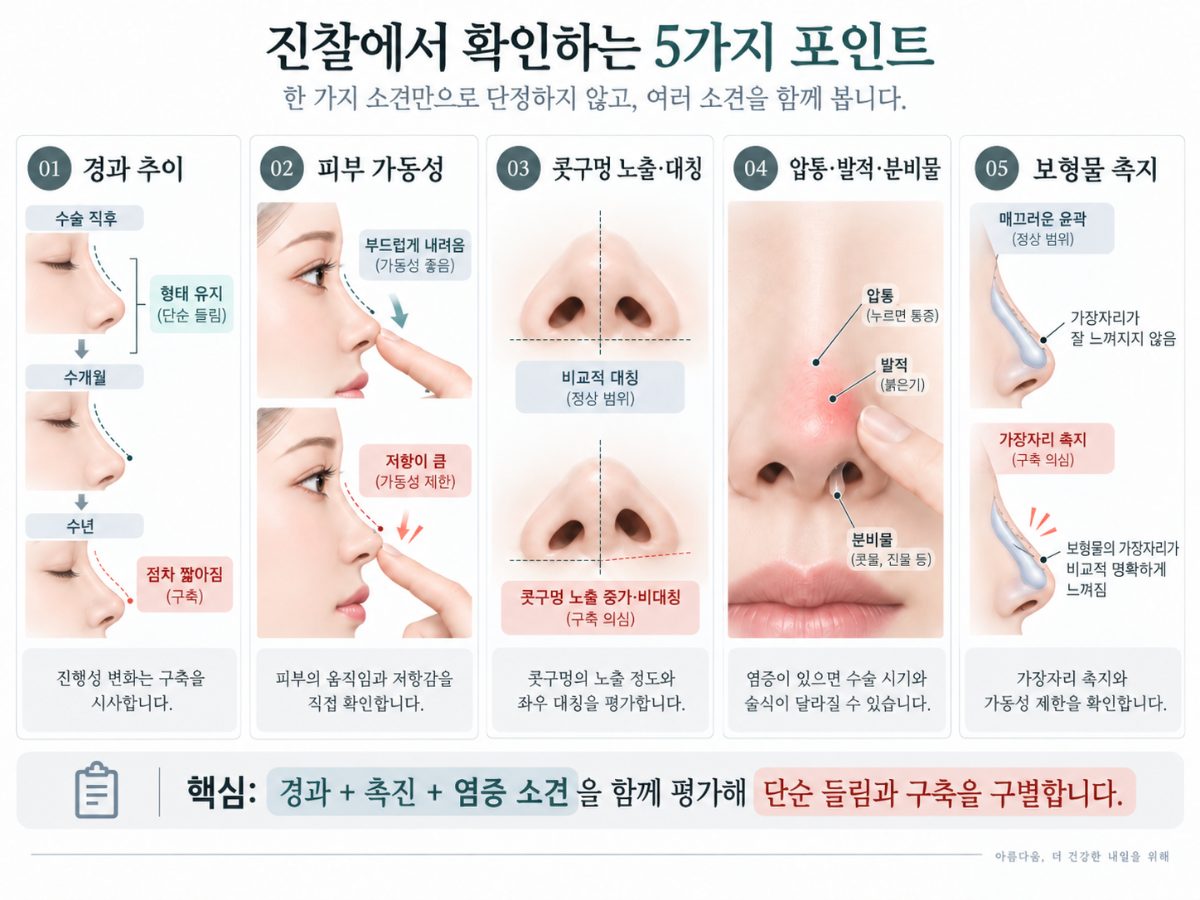
Five points are assessed together in clinic. No single finding is taken as conclusive; the judgment rests on the combination.
1. Course over time — whether the shape has held steady since the early postoperative period, or began shortening at some later point. Progressive change points toward contracture.
2. Skin mobility — how far the tip skin descends when drawn gently downward, and how strongly it springs back when released.
3. Nostril exposure and symmetry — whether the nostrils are unduly visible on frontal view, and whether asymmetry accompanies this.
4. Tenderness, redness, discharge — coexisting inflammation changes both the timing of revision and the choice of technique, so it is always checked.
5. Implant palpability — whether the implant edge is distinctly palpable and whether its mobility is restricted.
How Do Imaging and Graft Selection Differ?
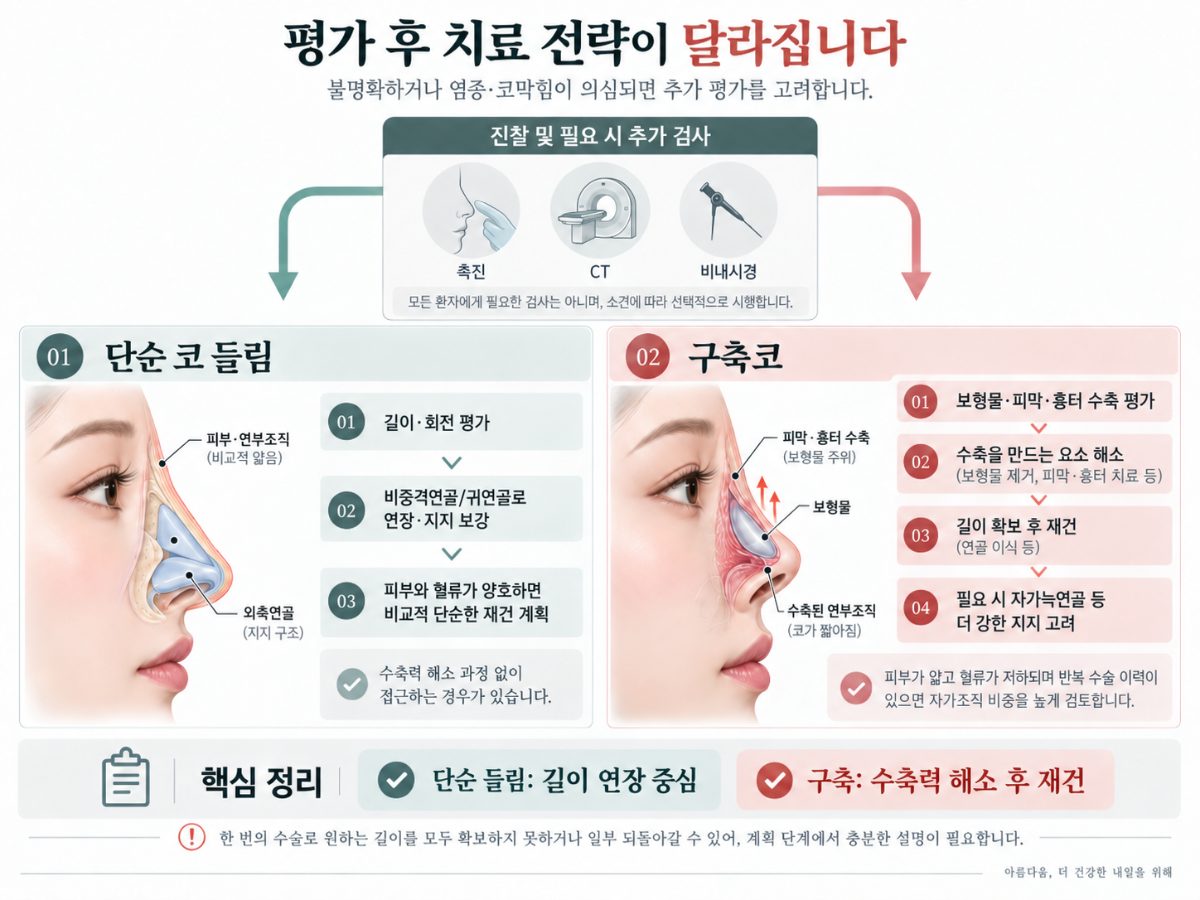
When palpation alone is inconclusive, or when chronic inflammation or nasal obstruction is suspected, computed tomography (CT) is used to assess the tissue around the implant and the septum, and nasal endoscopy to check the mucosa and any adhesions, before the operative plan is set. Neither study is required for every patient; they are used selectively according to findings.
When the picture reads as simple upward rotation with supple skin and good perfusion, the plan may consist of lengthening and reinforcing support with septal or conchal cartilage, without a release stage.
When contracture is confirmed, the order changes. The implant and capsule generating the contraction have to be addressed first, and holding the regained length calls for stronger support, which brings autologous rib cartilage into consideration. That said, when the skin and perfusion are favorable and the contractile force is modest, a plan may be made without going as far as rib cartilage. Conversely, when the skin is thin, perfusion is reduced, and there is a history of repeated surgery, weighting the plan toward autologous tissue is considered in order to reduce the risk of recurrent contracture.
In either situation, a single operation may not secure all of the intended length, and some of it may recede over time. This should be shared at the planning stage.
Summary
- What separates the two is not the outward look but how it changes over time and how the tissue behaves.
- Examination brings together five points: course over time, skin mobility, nostril exposure, tenderness and inflammatory signs, and implant palpability.
- Simple upward rotation is approached largely through lengthening; contracture follows a different order — release first, then reconstruction.
- Where inflammation is suspected or palpation is inconclusive, CT or nasal endoscopy may add useful information.
- These are general criteria; applying them requires individual assessment through an in-person consultation.
Frequently Asked Questions
Q1. It has been a year since surgery and my nose only now looks short. Is this contracture?
Change that progresses with time is a finding that raises the possibility of contracture. However, the original shape can also become more apparent as swelling resolves, making the nose seem relatively short. Distinguishing the two requires assessing whether the change is progressive alongside palpation findings.
Q2. Can I tell the difference myself by pressing the tip skin downward?
Mobility is a useful pointer, but pulling forcefully can strain the tissue, and the sensation differs depending on where you are in swelling resolution and scar maturation. Assessment in clinic, together with other findings, is more reliable than self-testing.
Q3. Does contracture always require autologous rib cartilage?
No. It depends on the degree of contractile force, the condition of the skin and its perfusion, the number of previous operations, and how much autologous cartilage remains. Plans that do not extend to rib cartilage are also made.
Q4. Is recovery faster after correcting simple upward rotation than after contracture surgery?
The extent of tissue handling is generally smaller, so the recovery burden tends to be lighter, but the pace of recovery and the point of final stabilization vary considerably between individuals. Subtle swelling and tissue settling typically continue over several months.
Related Columns
- Why Does a Contracted Nose Develop? Understanding the Causes and Correction
- How Is Late-Onset Contracture After Rhinoplasty Approached?
- Why Does the Nasal Tip Feel Hard After Rhinoplasty?
- When Can Revision Rhinoplasty Be Performed After the First Surgery?
Sources
- Korean Society of Plastic and Reconstructive Surgeons — public-facing clinical information materials
- Gunter JP, Rohrich RJ, Adams WP (eds.). *Dallas Rhinoplasty: Nasal Surgery by the Masters* — chapters on revision rhinoplasty and the short / contracted nose
- Neligan PC (ed.). *Plastic Surgery* (Aesthetic volume) — chapters on nasal anatomy and tip support
- Indications for nasal endoscopy and computed tomography follow general clinical principles for evaluating intranasal findings and chronic inflammation.
---
Author: Dr. Kim Ji-hun, Board-Certified Plastic Surgeon
Published: 2026-09-09 · Last updated: 2026-09-09
※ This column is provided for general medical information and does not substitute for the diagnosis or treatment of an individual patient. Indications, recovery, and possible complications of any surgery or procedure vary between individuals, and accurate judgment requires in-person examination and individual assessment by a specialist.